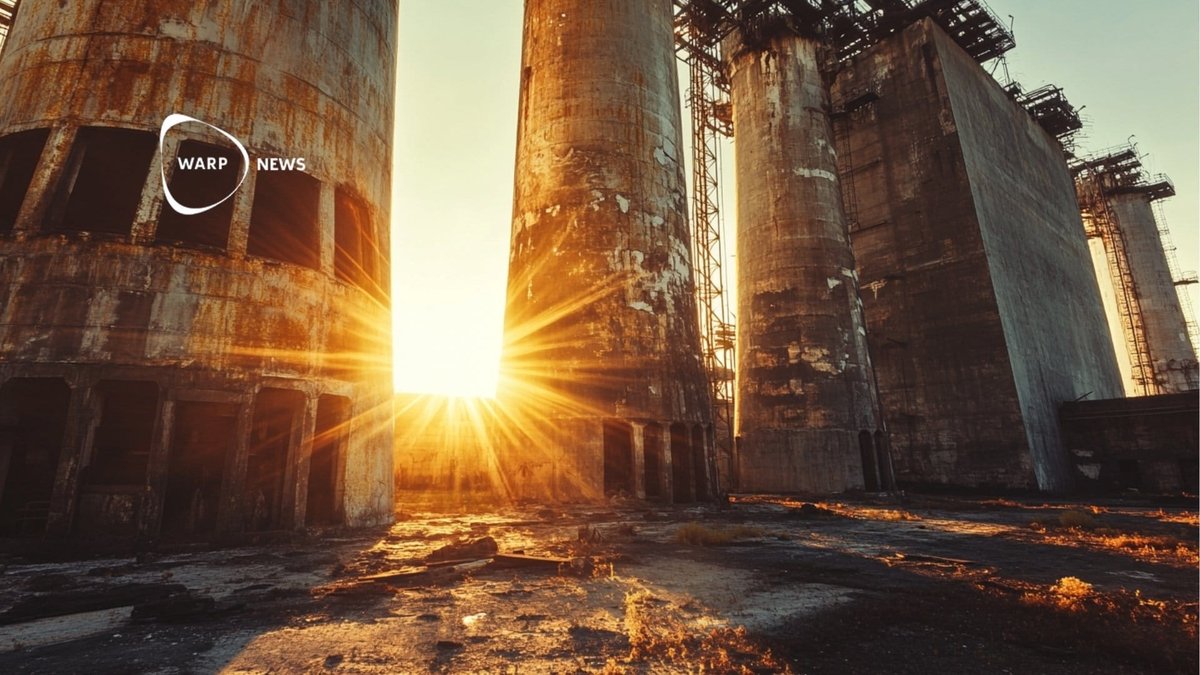
The very notion of "scaling large-scale coal power plants" today conjures a complex picture. In a world grappling with climate change and a rapid shift towards renewable energy, the expansion or even significant upgrade of these foundational energy assets presents a unique set of economic, environmental, and operational hurdles that were unimaginable just a few decades ago. It's a journey fraught with more contention and complexity than ever before.
At a Glance: Scaling Coal in the 21st Century
- High Capital Costs: New coal plants are astronomically expensive, often struggling to compete with cheaper renewables.
- Regulatory Roadblocks: Stricter environmental regulations and carbon pricing make permitting and operation increasingly difficult.
- Public Opinion: Widespread opposition and divestment campaigns create significant social and financial pressure.
- Technological Evolution: While advanced coal tech offers efficiency, Carbon Capture and Storage (CCS) remains largely unproven at scale.
- Grid Flexibility Demands: Modern grids require nimble power sources, a challenge for traditional baseload coal.
- Financing Drying Up: Lenders and investors are increasingly wary of backing new coal projects.
Beyond the Blueprint: Why Scaling Coal Power is No Longer Business as Usual
For over a century, coal power plants formed the backbone of industrial progress, offering reliable, abundant, and relatively inexpensive electricity. "Scaling" often meant simply building more of them, bigger and more powerful. Today, that narrative has completely flipped. We're not just discussing adding capacity; we're analyzing the very relevance and viability of these plants in a rapidly decarbonizing world.
Shifting Paradigms: From Constant Baseload to Flexible Generation
Historically, coal plants were designed for baseload operation – running constantly at near-full capacity to meet consistent demand. This made economic sense. However, the rise of intermittent renewables like solar and wind has changed the grid's needs dramatically. Grids now demand flexibility, the ability for power sources to ramp up and down quickly to balance fluctuations. Traditional large-scale coal plants, designed for inertia, struggle with this, forcing expensive modifications or leading to operational inefficiencies.
The Green Energy Squeeze: Competition and Policy Headwinds
The plummeting costs of solar and wind, coupled with advances in battery storage, have created fierce competition for coal. In many regions, building new renewable capacity is now demonstrably cheaper than operating existing coal plants, let alone constructing new ones. This economic pressure is amplified by evolving policy landscapes, including carbon taxes, emissions caps, and mandates for renewable energy integration, all of which disproportionately impact coal.
The Weight of Capital: Understanding the Investment Hurdle
Building a large-scale power plant has always been a massive undertaking, but for coal, the financial burden has become particularly onerous. According to the U.S. Energy Information Administration (EIA), the capital costs for new conventional coal plants are among the highest across various generation technologies. This isn't just about raw construction expenses; it includes the costs of increasingly stringent environmental controls, land acquisition, permitting, and the significant financial risk associated with long lead times and uncertain future revenues.
The Price Tag Problem: Unpacking Capital Costs and Financial Roadblocks
When we talk about scaling, we're fundamentally talking about investment. And for coal, that investment is increasingly difficult to justify.
Raw Numbers: What Does It Really Cost to Build?
Let's look at the numbers. The EIA's "Capital Cost Estimates for Utility Scale Electricity Generating Plants" (AEO2025 data, as referenced in the provided ground truth) indicates that a new pulverized coal (PC) plant can have an overnight capital cost in the range of several thousand dollars per kilowatt (kW). For perspective, this is often significantly higher than combined cycle natural gas plants and utility-scale solar PV or onshore wind projects, especially when considering the capacity factor differences and the absence of carbon costs for renewables. These figures represent the cost to build the plant itself, before financing charges, land, or any associated infrastructure. When you factor in the additional requirements for advanced emissions controls (like scrubbers for SOx, selective catalytic reduction for NOx, and particulate filters), the costs soar further.
Consider a 1,000 MW (1 GW) pulverized coal plant. Even at the lower end of the EIA's estimated capital cost range, you're looking at billions of dollars. This massive upfront investment carries substantial risk, particularly when faced with uncertain future carbon regulations or a volatile coal price market.
Financing in Flux: Who's Funding Coal Projects Today?
Securing financing for new large-scale coal projects has become a monumental challenge. Major international financial institutions, development banks, and even many private commercial banks have adopted policies to restrict or cease funding for new coal power development. This is driven by a combination of factors:
- Environmental, Social, and Governance (ESG) mandates: Investors are increasingly scrutinizing companies' environmental and social impacts.
- Reputational risk: Associating with coal can damage a bank's or investor's public image.
- Stranded asset risk: The concern that new coal plants, with their long lifespans, could become economically unviable before their capital is recovered due to policy changes or market shifts.
This dwindling pool of available capital means that only projects in specific geopolitical contexts, often with direct government backing, can realistically move forward.
Risk vs. Reward: The Long-Term Economic Outlook
Even if financing is secured, the long-term economic case for a new large-scale coal plant is shaky. Coal prices can be volatile, influenced by global supply chains, geopolitical events, and extraction costs. The cost of carbon emissions, either through direct taxes or trading schemes, is expected to rise globally, eating into operational profits. Moreover, the long asset life of a coal plant (typically 40-60 years) locks in a technology that may become increasingly obsolete or expensive to operate as cleaner alternatives mature. The reward for such a substantial, long-term risk needs to be exceptionally high, and current market conditions rarely offer that.
Environmental Tightrope: Navigating Emissions, Regulations, and Public Opinion
Perhaps the most significant challenge to scaling coal power plants lies in their environmental footprint and the societal response to it.
The Carbon Conundrum: CO2 and Climate Targets
Coal is the most carbon-intensive fossil fuel. Burning it releases significant amounts of carbon dioxide (CO2) into the atmosphere, a primary driver of climate change. With global efforts intensifying to meet ambitious emissions reduction targets (like those outlined in the Paris Agreement), any proposal to scale up coal power capacity directly clashes with these objectives. The sheer volume of CO2 from a large-scale coal plant is difficult to offset or mitigate without expensive and unproven technologies.
Local Pollutants: Still a Concern (SOx, NOx, PM)
Beyond CO2, coal combustion also releases a range of conventional air pollutants, including sulfur oxides (SOx), nitrogen oxides (NOx), particulate matter (PM), and heavy metals like mercury. While modern coal plants incorporate advanced pollution control technologies—such as flue gas desulfurization (scrubbers) and selective catalytic reduction (SCR)—these systems add considerable capital and operational costs. Despite these technologies, local air quality impacts and health concerns remain a significant issue, particularly in densely populated areas.
The Social License: Battling Public and Political Opposition
The public perception of coal power has shifted dramatically. Environmental advocacy groups, local communities, and an increasingly climate-aware populace often mount strong opposition to new coal projects or even the continued operation of existing ones. This "social license to operate" is critical. Without public acceptance and political support, projects face endless delays, legal challenges, and a persistent negative image that can impact recruitment, community relations, and brand reputation.
Technology's Double-Edged Sword: Modernizing for Survival (or Obsolescence)
While the challenges are immense, technological advancements offer some pathways for coal power to become more efficient and cleaner, though these often come at a premium.
Efficiency Boosters: Ultra-Supercritical and Advanced Designs
Modern coal plants, particularly those employing ultra-supercritical (USC) or even advanced ultra-supercritical (A-USC) technology, operate at much higher temperatures and pressures than older subcritical plants. This dramatically increases their thermal efficiency, meaning they generate more electricity from less coal, thereby reducing CO2 and other pollutant emissions per unit of power. Integrated Gasification Combined Cycle (IGCC) plants also offer higher efficiency and make carbon capture easier. However, these technologies are complex, more expensive to build, and still produce significant emissions.
To dive deeper into what makes these generators tick and the various types available, you might find our Satisfactory Coal Generator Guide a useful resource.
The CCS Dream: Hope or Pipe Dream for Large-Scale Deployment?
Carbon Capture and Storage (CCS) is often touted as the "holy grail" for making coal palatable in a low-carbon future. CCS technology captures CO2 emissions directly from the power plant's flue gas, compresses it, and then transports it for permanent underground storage. While demonstration projects exist, the large-scale, economic deployment of CCS on commercial coal plants remains elusive. The technology itself is energy-intensive (reducing the plant's net output) and adds substantially to both capital and operational costs, making the resulting electricity significantly more expensive. The lack of extensive CO2 transportation and storage infrastructure also presents a major hurdle.
Flexibility is Key: Adapting to a Dynamic Grid
As mentioned, the grid needs flexibility. For large-scale coal plants, this means designing for faster ramp rates (how quickly they can increase or decrease power output) and lower minimum load levels (the lowest output they can operate at efficiently). Technologies like flexible operation modes, improved burner designs, and advanced control systems can enhance this flexibility. However, these modifications add cost and can put additional stress on plant components, impacting maintenance schedules and operational longevity. The concept of "flexible coal" aims to address this, positioning coal as a reliable backup for renewables, but it shifts the economic model from constant baseload to intermittent dispatch, challenging the long-term financial viability.
Operational Headaches: Keeping the Lights On in a Changing Grid
Beyond the initial investment and environmental considerations, the day-to-day operation of large-scale coal plants presents its own set of challenges, particularly for those looking to scale up or extend their lifespan.
Aging Infrastructure: The Cost of Maintenance and Upgrades
Many existing large-scale coal plants globally are decades old. While robustly built, they require continuous maintenance, upgrades, and sometimes complete overhauls to remain operational, efficient, and compliant with modern standards. Scaling an existing plant often means extensive retrofitting, replacing old components, or adding new pollution controls. These "life extension" projects can be nearly as complex and costly as building new capacity, but they typically have a shorter payback period due to existing infrastructure. However, the decision to invest billions into an aging asset hinges on a clear, favorable long-term policy and economic outlook, which is increasingly rare for coal.
Integrating Intermittency: Balancing Coal with Renewables
The rapid deployment of variable renewable energy sources presents a significant operational challenge for coal plants. As solar and wind output fluctuates, dispatchable power sources like coal are increasingly required to provide grid stability, acting as a "backup" or "load-following" power. This means coal plants must cycle more frequently, ramping up and down throughout the day. This operational mode is less efficient, increases wear and tear on equipment, and reduces the overall capacity factor (the percentage of time the plant is running at full power), thereby diminishing revenue per unit of installed capacity. Managing this integration seamlessly requires sophisticated grid management systems and predictive analytics.
Water Scarcity: A Growing Constraint for Thermal Power
Large thermal power plants, including coal-fired ones, are significant consumers of water, primarily for cooling purposes. As freshwater resources become scarcer and climate change impacts regional water availability, access to sufficient cooling water is becoming a critical operational constraint. Permitting for new plants or even expanding existing ones in water-stressed regions faces intense scrutiny. Implementing closed-loop cooling systems or using alternative cooling methods can reduce water consumption but adds substantial capital and operational costs, affecting overall plant economics.
Strategic Choices for the Future: Navigating the Decision Landscape
Given the array of challenges, decision-makers are left with difficult strategic choices regarding coal power. It's no longer a straightforward "build it and they will come" proposition.
Is Expansion Viable? Decision Criteria for Existing Plants
For existing large-scale coal plants, the decision to expand capacity or significantly upgrade hinges on several factors:
- Regulatory Certainty: Are there clear, stable long-term policies regarding carbon emissions, pollution control, and coal generation?
- Economic Competitiveness: Can the plant operate profitably against cheaper alternatives over its extended lifespan, considering fuel costs, carbon prices, and O&M?
- Grid Needs: Does the grid genuinely require the plant's specific attributes (e.g., baseload capacity, voltage support) for long-term stability?
- Community Acceptance: Is there local and regional support, or at least tolerance, for its continued operation and potential expansion?
- Technological Fit: Can the plant be affordably retrofitted with advanced emissions controls or flexibility upgrades?
Without a strong positive answer to most of these questions, significant investment into existing coal assets becomes a high-stakes gamble.
The "Last Resort" New Build: When (and Where) Might It Make Sense?
In very specific scenarios, a new large-scale coal plant might still be considered, often as a "last resort" for energy security or economic development in energy-poor regions. These scenarios typically involve:
- Abundant, Cheap Local Coal: Countries with significant domestic coal reserves might view it as a way to reduce reliance on imported fuels.
- Lack of Alternative Resources: Regions without viable renewable potential or access to natural gas infrastructure.
- Developing Economies: Countries prioritizing rapid electrification and industrialization, sometimes at the expense of environmental considerations in the short term.
- Government-Backed Projects: Where state entities directly fund and operate projects, bypassing traditional financial markets.
However, even in these cases, the long-term risks (e.g., future carbon liabilities, technological lock-in, international pressure) are substantial.
Diversification vs. Specialization: Role of Coal in Future Energy Mixes
The future role of large-scale coal plants is likely to be highly specialized rather than broadly diversified. Instead of a primary baseload provider, coal might serve as a secure, dispatchable capacity provider, ramping up during peak demand or when renewables are low. This specialization requires significant investment in flexibility and operational agility. Energy mixes worldwide are increasingly diversified, aiming for a portfolio approach that leverages the strengths of various sources while mitigating their weaknesses. For coal, this means proving its value as a secure, reliable (if expensive and carbon-intensive) component rather than the dominant player it once was.
Common Questions About Coal Plant Scaling
Navigating the complexities of coal power often raises fundamental questions about its future.
"Can coal ever be truly clean?"
Defining "truly clean" is subjective, but in the context of global climate goals, coal power currently cannot be considered "clean" without effective, widely deployed carbon capture technologies. While modern plants are significantly cleaner than their predecessors in terms of conventional pollutants (SOx, NOx, particulate matter), their CO2 emissions remain substantial. Until CCS is proven and economical at scale, coal will continue to be a high-carbon energy source.
"Are new coal plants still being built anywhere?"
Yes, new coal plants are still being built, primarily in developing Asian countries such as China, India, and Indonesia. These projects are often driven by surging electricity demand, national energy security concerns, and access to domestic coal reserves. However, the pace of new construction has slowed significantly, and many projects face substantial delays or cancellations due to financial and environmental pressures.
"What role do existing coal plants play in grid stability?"
Existing coal plants, particularly large ones, currently play a critical role in grid stability in many regions. They provide inertia to the grid, helping to maintain frequency and voltage, and offer dispatchable capacity that can be ramped up or down to balance supply and demand. As more intermittent renewables come online, the dispatchable and stability services of thermal plants, including coal, become even more crucial, at least until advanced storage and grid management technologies can fully take over these functions.
Your Next Steps in Understanding Coal's Evolving Role
Understanding the challenges of scaling large-scale coal power plants isn't about advocating for or against them; it's about making informed decisions in a rapidly changing energy landscape.
As you delve deeper, consider these actionable steps:
- Focus on Data-Driven Analysis: Always seek out credible sources for capital costs, operational efficiencies, and emissions data. Reports like those from the EIA provide invaluable insights into the economic realities.
- Consider the Full Lifecycle Impact: Beyond direct emissions, think about the entire supply chain, from mining and transportation to waste disposal and water usage. A holistic view is essential for true sustainability assessment.
- Stay Informed on Policy and Technology Shifts: The energy sector is dynamic. Regulations, carbon markets, and technological breakthroughs (especially in renewables and storage) can quickly alter the viability of any power generation source.
- Evaluate Regional Context: Energy decisions are highly localized. What makes sense for one country or region (e.g., a reliance on domestic coal for energy independence) may be completely inappropriate for another.
The era of unfettered expansion for large-scale coal power is largely behind us. The future, if it includes coal, will likely be one of careful optimization, strategic flexibility, and a relentless pursuit of efficiency and emission reductions, all within a much broader and greener energy ecosystem.