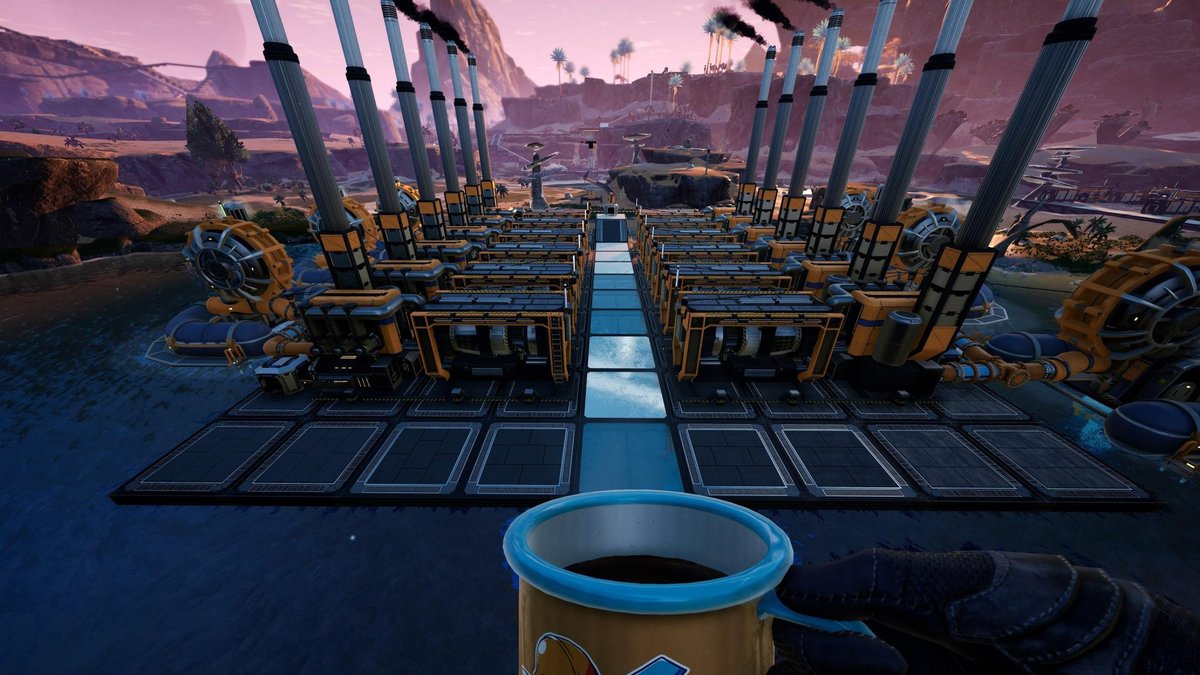
Congratulations, Pioneer! You've reached a pivotal moment in your FICSIT journey: unlocking the satisfactory coal generator. This isn't just another power source; it's your first taste of truly automated, self-sustaining electricity, freeing you from the tyranny of biomass burners and catapulting your factory into a new era of efficiency. Mastering coal power is a fundamental step towards mega-factories and advanced production chains, providing a robust and scalable energy backbone.
We're here to guide you through every facet of building, optimizing, and scaling your coal power infrastructure, ensuring your factory never goes dark.
The Dawn of Automated Power: Your First Coal Generators
The Coal Generator is a game-changer, becoming available at Tier 3 under the "Coal Power" category. Imagine: no more manually feeding leaves or wood! This building efficiently combines Coal (or its more potent derivatives) and Water to produce a consistent 75 MW of power per unit at 100% clock speed. It's the stable foundation your expanding factory desperately needs.
Each generator accepts both Conveyor Belt input for fuel and Pipeline input for water, seamlessly integrating into your automated logistics. Building one requires 20x Reinforced Iron Plate, 10x Rotor, and 30x Cable – a manageable cost for the power dividends it offers. To ensure you lay the perfect groundwork and understand all the essentials from the get-go, dive deeper into Coal Power Basics & Initial Setup where we cover everything you need to know to get started.
Fueling the Fire: Coal & Water Logistics
At its core, a single Coal Generator consumes 15 Coal/min and 45 m³ Water/min, regardless of the fuel type. This consistent consumption rate is key to planning your resource extraction and delivery. While Coal itself is a relatively straightforward resource to mine and transport, managing the water supply often presents the first significant logistical puzzle for new pioneers.
Three Water Extractors operating at 100% clock speed produce 360 m³/min of water, which is precisely enough to feed eight Coal Generators (8 x 45 m³/min = 360 m³/min). This "8 Coal Generators : 3 Water Extractors" (8:3) ratio is highly efficient and scalable, forming the bedrock of most coal power designs. However, early Mk.1 Pipelines have a throughput limit of 300 m³/min. This means a single pipeline cannot physically carry enough water for all eight generators from a single entry point. You'll need to spread your water supply across multiple pipelines or strategically introduce water at various points along a single pipe to prevent flow issues. For an exhaustive guide on solving these challenges and optimizing your liquid transport, explore our pillar on Coal & Water Resource Logistics.
Designing for Success: Optimal Layouts and Placement
Crafting an efficient and aesthetically pleasing coal power plant involves thoughtful layout design. The optimal 8:3 ratio, with its specific water input requirements, often dictates a common build pattern. You can achieve compact placements, fitting generators down to 8 meters center-to-center by carefully positioning them.
A common strategy involves building a platform, placing three Water Extractors, and then arranging eight Coal Generators around them, ensuring pipeline access is maximized. For instance, you might place a Coal Generator, then two more to its right, with a Water Extractor fitting snugly between the second and third. Connecting these components involves a mix of Mk.2 Conveyor Belts (preferred for throughput) and a well-planned pipe network with junction crosses at every connection point. To truly master the art of compact and efficient builds, including step-by-step instructions for the popular 8:3 setup, consult our guide on Optimal coal generator layouts Design efficient facilities that you can proudly expand.
An Optimal 8:3 Coal Generator Setup (Simplified Steps):
- Platform First: Lay down a sturdy 5x12 foundation (or build directly on water).
- Generator Placement: Start with your first Coal Generator, then place two more to its right.
- Water Extractor Alignment: Position a Water Extractor so its connector aligns perfectly between the pipes of your second and third generators.
- Complete Extractors: Place the remaining two Water Extractors adjacent to the first.
- Finish Generators: Complete the full set of eight Coal Generators.
- Fuel Delivery: Install Mk.2 Conveyor Lifts next to each Coal Generator, aiming the Conveyor side towards your coal source. Connect them all with Mk.2 belts for smooth fuel flow.
- Water Piping: Run a pipe from your first Coal Generator, turn 90 degrees, extend it to the last generator, turn 90 degrees again, and connect.
- Junctions: Add junction crosses at every pipe entrance of each Coal Generator and at the entrance of each Water Extractor, connecting them into your main water lines.
- Power Up: First, power your Water Extractors to allow pipes to fill, then bring your Coal Generators online.
- Verify Flow: Always ensure water pipes are fully filled before activating Coal Generators to prevent power interruptions.
Calculating Your Power Needs: Ratios and Expansion
Understanding your factory's power requirements is paramount for stable growth. You can estimate your building needs with simple formulas:
- Number of Coal Generators:
Coal mining rate / 15(since each consumes 15 Coal/min) - Number of Water Extractors:
Number of Coal Generators / 2.6666(based on the 8:3 ratio) - Number of Pipelines:
Number of Coal Generators / 6.6666(considering Mk.1 pipeline limits)
It's also crucial to consider net power output. Water Extractors consume power (around 10% of gross output), as do miners, pipeline pumps, and other supporting infrastructure. Always subtract these operational costs from your gross power production to know your true usable energy. To refine your planning and dive deep into the specific calculations that guarantee peak performance for your expanding factory, we highly recommend our dedicated guide: Berikut beberapa pilihan: Optimize your coal generator ratios and efficiency calculations.
Scaling Up: From Small Plant to Industrial Powerhouse
Once you've mastered the basics, your factory will undoubtedly demand more power. Scaling your coal plant involves replicating the efficient 8:3 modules and leveraging higher-tier components. Mk.2 Pipelines, with their impressive 600 m³/min capacity, become invaluable here, allowing a single line to support up to 13 Coal Generators and 5 Water Extractors. This significantly simplifies water distribution for larger setups.
Consider alternative fuel sources as well. Compacted Coal, produced from Coal and Sulfur, offers a massive energy boost (630 MJ per item vs. 300 MJ for raw coal), requiring fewer items per minute and extending your fuel reserves. Petroleum Coke, a byproduct of oil processing, provides an excellent way to turn waste into valuable energy, though it demands careful overflow management. Expanding your power grid intelligently, integrating these advanced strategies, and planning for future growth is covered comprehensively in Scaling Large-Scale Coal Power Plants – your blueprint for massive power infrastructure.
As your factory expands, a reliable and scalable power source is no longer a luxury but a necessity. By mastering the satisfactory coal generator, you're not just building a power plant; you're forging the very backbone of your industrial empire. With these insights and the detailed guides at your fingertips, you're well-equipped to illuminate your FICSIT future, one automated mega-watt at a time.